How to Bring Cuban Cigars Into the U.S.
You came to Cuba, had a great trip and found cigars you would really like to enjoy again.
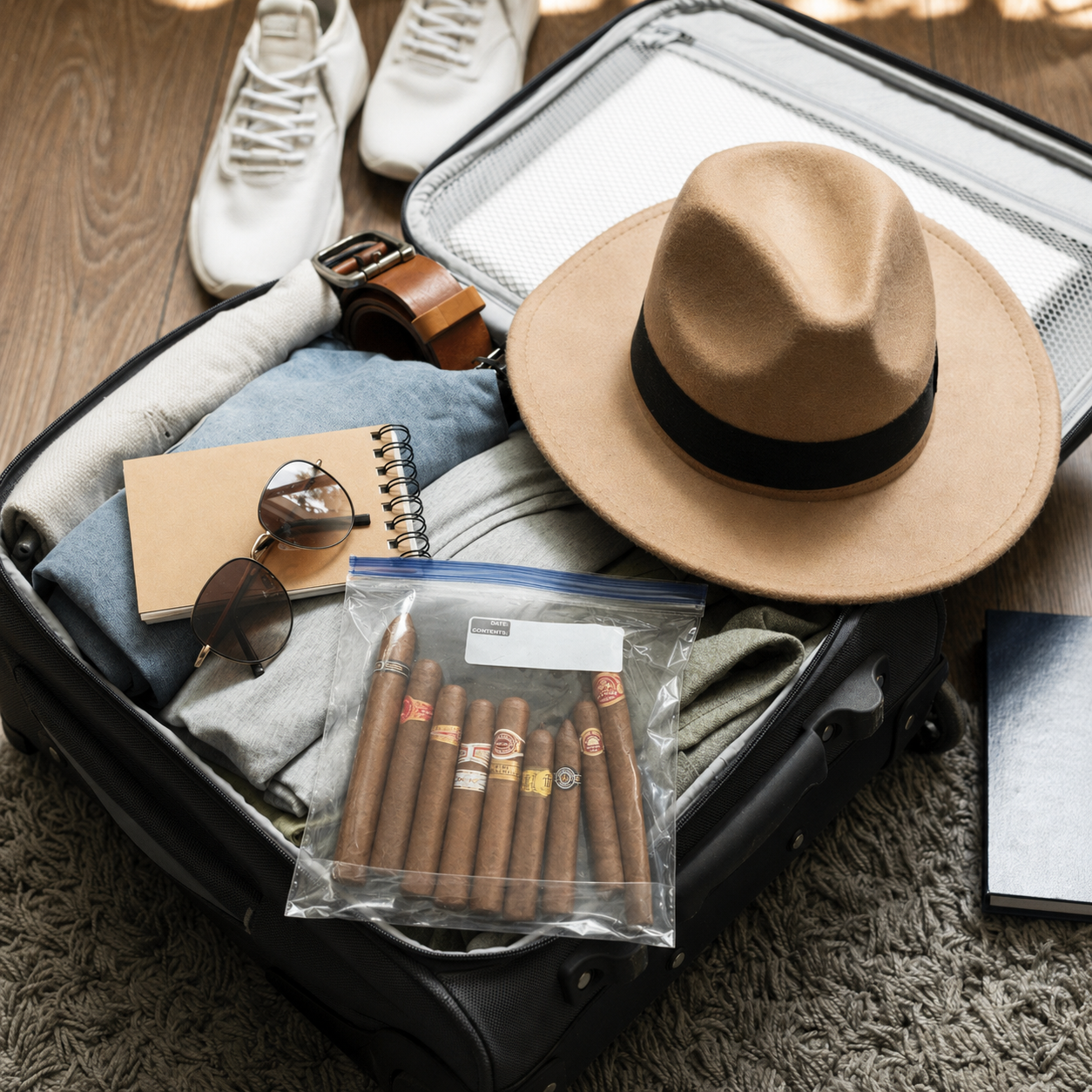
You Had a Great Trip. Now What?
Now comes the question almost every cigar smoker eventually asks:
Do I take the cigars with me, or leave them behind?
For me, part of that decision comes down to whether you think you will be back.
If you know another trip to Cuba is coming soon, leaving them behind may be the easiest decision. There will be more cigars and another trip.
If this might be your only visit—or you simply have no idea when you will return—I understand why you may look at that box differently. You found the cigars here. You paid for them. You enjoyed them. Naturally, you want to take some home.
Before making that decision, understand what the U.S. rules say, understand the risk and then make your own choice.
One Important Distinction Before We Start
At a Glance
- Article focus
- Taking Cuban cigars into the United States.
- Cuba departure summary
- Up to two sealed, original boxes without receipts, plus up to 20 loose cigars.
- Opened boxes
- If the original seal is broken, the cigars are treated as loose cigars.
- United States rule
- Cuban-origin tobacco may not currently be brought into the United States as accompanied baggage.

This article is about taking Cuban cigars into the United States. It is not about how many cigars Cuba allows you to take out of the country.
Those are two separate questions with two different sets of rules.
We cover Cuba’s cigar export rules in another article [here].
In summary, you may leave Cuba with up to two sealed, original boxes without receipts, plus up to 20 loose cigars. If the original box seal has been broken, those cigars are treated as loose cigars rather than as a sealed box.
If you’re buying more, carrying opened boxes or want to understand Cuba’s documentation requirements, read that article before you pack.
Here we’re dealing with what happens on the other end:
You have left Cuba. Can you take those cigars into the United States?
International and Domestic Travel Are Different
International Arrival
U.S. Customs
Deals with people and merchandise entering the United States.
Domestic Flight
TSA
Deals primarily with transportation security. Cigars are permitted in carry-on and checked luggage.
Before getting into the U.S. rules, understand one other distinction.
Entering the United States from another country and taking a domestic flight after you’re already inside the United States are different situations.
U.S. Customs and TSA are not the same thing.
Customs deals with people and merchandise entering the United States. TSA is primarily concerned with transportation security.
Cigars themselves are permitted in carry-on and checked luggage on domestic flights. That doesn’t answer how Cuban-origin cigars originally entered the country; it simply means domestic TSA screening and international Customs inspection are different issues.
We’ll come back to domestic travel below.
What OFAC Says
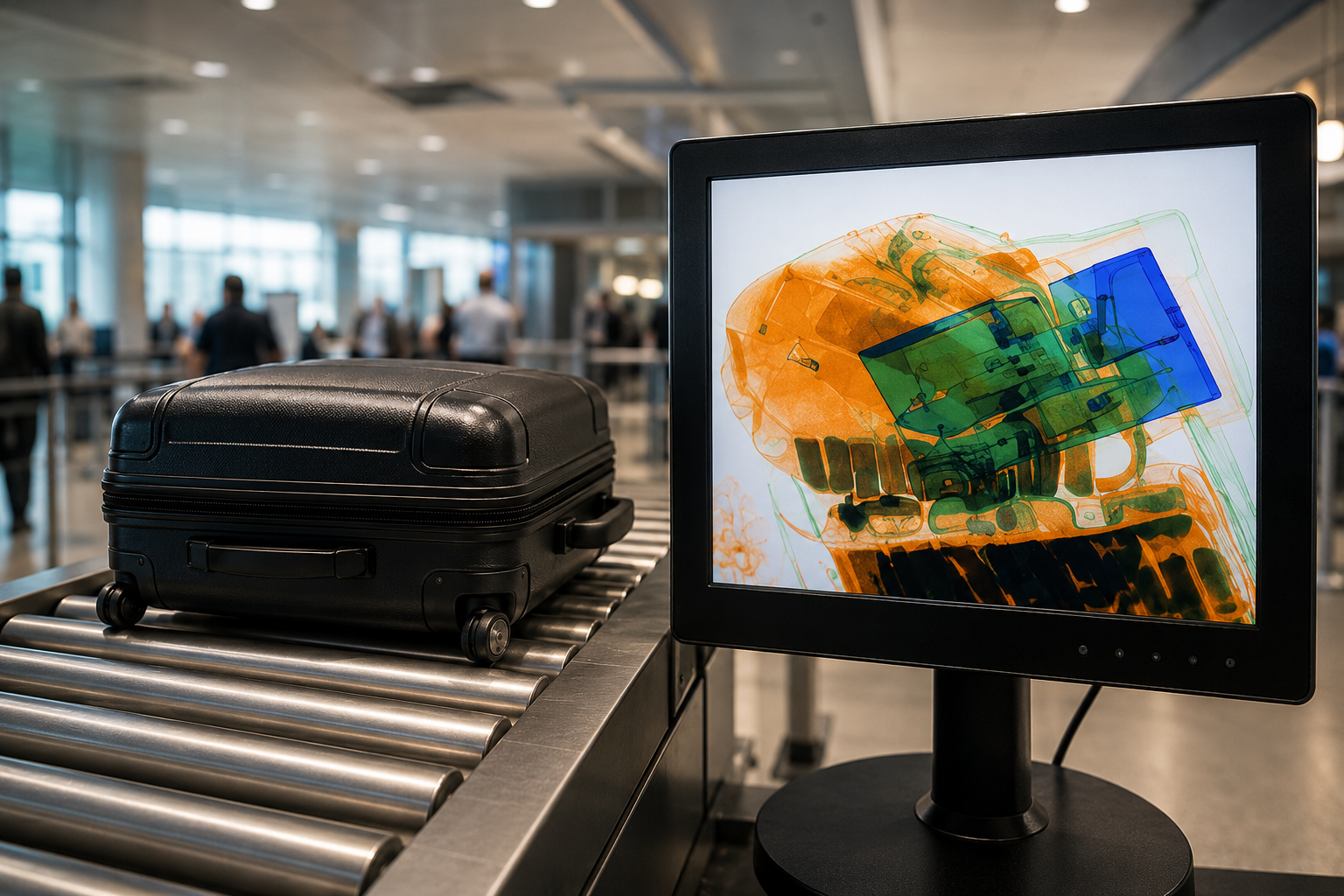
Now the rule.
As of 2026, the U.S. Treasury Department’s Office of Foreign Assets Control—OFAC—does not allow travelers to bring Cuban-origin tobacco or alcohol into the United States for personal use.
The rules were different in the past. There was a period when Americans could bring limited quantities of Cuban cigars home for personal consumption. That’s one reason you still hear completely different answers from experienced travelers.
Those older rules no longer apply.
Today, OFAC says travelers may purchase Cuban cigars and alcohol for personal consumption while legally in Cuba, but they may not bring those products into the United States as accompanied baggage.
The same applies if you bought the cigars somewhere else.
A Cuban cigar purchased in Madrid is still Cuban. So is one purchased in Mexico, Canada or the Bahamas.
Where you bought the cigar doesn’t change where it was made.
The familiar personal duty exemption doesn’t override the Cuban-origin tobacco restriction either.
So that’s the rule:
You are not currently permitted to bring Cuban-origin cigars or rum into the United States as a traveler.
Now comes the part that actually matters to you.
You Know the Rule and the Risk. Now What?
Keep the Rest of Your Luggage Simple
- Review before packing: Food, fruit, meat, plants, seeds, agricultural products and wildlife products.
- If you do not need it: Leave it behind.
- Before arriving: Know the rule, accept the risk and know what is in your bag.

You have a decision to make.
If you decide to leave the cigars behind, that’s easy.
If you decide to take them anyway, understand before you pack that Customs may confiscate them.
Once you’ve accepted that possibility, keep the rest of your luggage simple.
If the cigars are your priority, remove anything else you don’t need that could create its own Customs issue.
Look through your luggage before you leave.
- Food
- Fruit
- Meat
- Plants
- Seeds
- Agricultural products
- Wildlife products
Those categories have their own U.S. entry and declaration requirements. Why introduce another potential problem because you wanted to bring home a piece of fruit or some food you didn’t really need?
If you don’t need it, leave it behind.
That doesn’t make Cuban cigars legal. It doesn’t change the OFAC restriction and doesn’t guarantee your luggage won’t be inspected.
It simply keeps your luggage simple.
If the cigars are the priority, keep everything else simple.
Know the rule. Accept the risk. Know what’s in your bag.
Then stop worrying about it and enjoy the rest of your trip.
What I Do
I normally have cigars with me when I travel.
When I’ve been asked general Customs questions, there have been times when I answered “No” even though I had cigars with me.
My understanding was that the question concerned commercial merchandise, not a few cigars I had with me for my own consumption.
I also understood the risk I was taking.
If Customs determined that the cigars couldn’t enter the country, I was prepared to lose them.
They take the cigars, and I go on with my trip.
That’s an important part of my thinking.
I’m not traveling with cigars because I think there is no rule. I know the rule. I know the cigars can be confiscated, and I’ve accepted that possibility before I get to the airport.
I’m also not telling you to answer Customs the way I have answered. You’re responsible for answering Customs questions truthfully.
I’m telling you what I have done and how I personally look at the decision.
If they stay, fine.
If they go, fine.
They’re cigars.
At Customs
Now you arrive in the United States.
You know the rule. You know what’s in your luggage. You’ve already accepted the possibility that the cigars could be taken.
Don’t make Customs more complicated than it needs to be.
Listen to the question and answer what was asked.
If a question can truthfully be answered with one word, one word is enough.
Keep the Answer Simple
Yes.
No.
You don’t need to volunteer cigar brands, vitolas, prices, shops or the story of how you found a particular box.
A short question doesn’t need a long answer.
- Be friendly.
- Be respectful.
- Follow instructions.
If Your Bag Is Inspected
If Customs wants to inspect your luggage, let them inspect it.
No drama.
Being pulled aside doesn’t automatically mean somebody is looking for your cigars.
Travelers can be selected for additional inspection for different reasons.
From what I have personally seen, about 90% of travelers carrying cigars and/or rum who are selected for an inspection still leave with them.
In many of those cases, the inspection appeared to be focused on something else—such as drugs, agricultural products or restricted wildlife—not the cigars.
That 90% is my personal observation. It isn’t an official Customs statistic, and it isn’t a guarantee of what will happen to you.
There’s another side to what I’ve seen.
When Cuban cigars or rum are specifically identified and discussed with the officer, I have seen them confiscated every time. In my experience, that’s been 100 percent.
Again, that’s my experience, not an official Customs statistic.
The point is that being selected for an inspection doesn’t automatically mean the cigars are the reason.
Don’t panic. Don’t get nervous and start giving a running commentary about everything in your suitcase.
Be friendly. Let the officer conduct the inspection.
If you’re asked a direct question, answer it truthfully and briefly.
If the officer determines that your cigars or rum cannot enter, follow the instructions.
No argument. No confrontation. They’re cigars. Go on with your trip.
What About the Dogs and Machines?
This is another subject travelers tend to overthink.
You see a dog in the international-arrivals area or your bag gets selected for additional screening, and suddenly you’re thinking about the cigars.
Remember that border inspections involve much more than tobacco.
Different detection and inspection programs can be concerned with:
- Drugs
- Explosives
- Agricultural products
- Prohibited food
- Wildlife products
- Other restricted goods
So don’t automatically assume a dog, machine or inspection is about your cigars.
At the same time, don’t build your plans around guessing what a particular dog can smell or what a machine can identify.
There’s no need.
You already made your decision.
Let them do their job.
If They Find the Cigars
Suppose your bag is inspected and the officer identifies your Cuban cigars.
If the officer tells you they cannot enter and must be surrendered, let them go.
- Don’t argue.
- Don’t demand the box back.
- Don’t become confrontational.
You knew this was one possible outcome when you decided to travel with them.
The box is replaceable.
Turning a few cigars into an argument with a Customs officer accomplishes nothing.
They’re cigars. Go on with your trip.
What If You Bought Them in Spain, Mexico or Canada?
Buying Cuban cigars outside Cuba doesn’t change their origin.
A Bolívar Petit Coronas purchased in Madrid remains Cuban-origin tobacco.
The same applies to Cuban cigars purchased in Mexico, Canada, the Bahamas or elsewhere.
OFAC specifically addresses this situation: Cuban-origin tobacco and alcohol acquired in a third country may be consumed outside the United States, but that doesn’t mean those products may be imported into the United States.
- So Spain doesn’t change the rule.
- Neither does Mexico.
- Neither does Canada.
If the tobacco is Cuban, it remains Cuban.
What About the $800 Exemption?
The $800 personal exemption causes almost as much confusion.
Travelers hear “$800 duty-free” and assume a few cigars worth less than that amount should be fine.
But the personal exemption doesn’t override the Cuban-origin tobacco restriction.
A $25 Cuban cigar is still Cuban-origin tobacco.
A $500 box is still Cuban-origin tobacco.
The value doesn’t change the origin.
Domestic Travel With Cigars
Once you’re traveling entirely within the United States, you’re dealing with a different situation.
Flying from New York to Las Vegas isn’t the same as arriving in Miami from Havana, Madrid or Mexico City. You’re no longer crossing an international border and importing merchandise.
Cigars themselves are permitted by TSA in both carry-on and checked baggage.
That doesn’t settle the separate question of how a Cuban-origin cigar originally entered the United States. It simply means that TSA’s job at a domestic airport checkpoint is different from Customs’ job at the border.
For the cigar traveler, that’s the distinction worth remembering:
Customs deals with entering the country. TSA deals primarily with transportation security.
So, Take Them or Leave Them?
Now we’re back to where we started.
- You had a great trip.
- You found cigars you like.
Do you take them or leave them?
If you know you’ll be back in Cuba soon, maybe you leave them. There will be another trip.
If you don’t know when you’ll return, I understand why you might decide differently.
But make that decision knowing what OFAC says.
If you decide to travel with Cuban cigars, understand that they may be confiscated.
If the cigars are your priority, keep the rest of your luggage simple.
Then stop worrying about it.
Enjoy Cuba.
Buy From Us Here—or When You Get Home
Three Simple Choices
- Take the cigars with you.
- Leave them with us to ship.
- Or order another box when you get home.

There is also the simplest option.
Buy from us.
If you’re here in Cuba, buy from us while you’re here. Let us help you find the cigars you came looking for, try something different and enjoy the tobacco while you’re experiencing the island.
If you’ve purchased cigars from us and still have unsmoked cigars when it’s time to leave, we can ship them for you.
So if you’d rather not travel with the cigars, leave them with us and we’ll take care of the shipping.
And when you’re home and ready for another box, contact us again. We can ship you a box.
That gives you three simple choices:
Take the cigars with you. Leave them with us to ship. Or order another box when you get home.
The point isn’t to make Customs frightening.
It’s to keep cigars what they should be: something you enjoy.
Official Resources Worth Bookmarking
Rules change, and something that was correct on your last trip may not be correct on your next one. If you want to read the U.S. rules yourself, these are the places I would start:
- OFAC FAQ 719 — Cuban tobacco and alcohol purchased in Cuba
Explains the current rules for travelers purchasing Cuban tobacco and alcohol while in Cuba. - OFAC FAQ 720 — Cuban-origin merchandise purchased in another country
Useful if you bought Cuban cigars in Spain, Mexico, Canada or another third country. - OFAC Cuba Sanctions FAQs
The broader Treasury Department collection covering current Cuba sanctions and travel-related questions. - U.S. Customs and Border Protection — International Travelers
Useful for understanding the Customs process and current requirements when entering the United States. - USDA APHIS — Traveling With Agricultural Products
Check this before packing fruit, meat, food, plants, seeds or other agricultural products. - U.S. Fish & Wildlife Service — Information for Travelers
Useful if you’re carrying wildlife products or anything made from animal or plant species that may be restricted.
Check the current guidance shortly before you travel.
The rule that matters is the rule in effect when you enter the country.
Final Thought
You came to Cuba to enjoy Cuba.
- The tobacco
- The people
- The meals
- The conversations
- The cigar you discovered and already know you want to smoke again
Don’t let the trip home become bigger than the trip itself.
If you’re coming back soon, maybe you leave the cigars and see us next time.
If you decide to take them, know the rule, accept the risk and keep the rest of your luggage simple.
If Customs takes them, don’t turn it into something bigger.
They’re cigars. Go on with your trip.
And remember, you have another choice.
Buy from us while you’re here. Leave your unsmoked cigars with us to ship. Or contact us when you’re home and we’ll ship you another box.
However you decide to handle the trip, the goal is the same:
Enjoy the cigars.