International Pepe Sánchez Trova Festival
Every March, voices and guitars take over Santiago de Cuba for the International Pepe Sánchez Trova Festival. Concerts move through theaters, music halls, parks and public spaces, turning the city into a celebration of the musical tradition that helped make Santiago one of Cuba’s most important cultural centers.
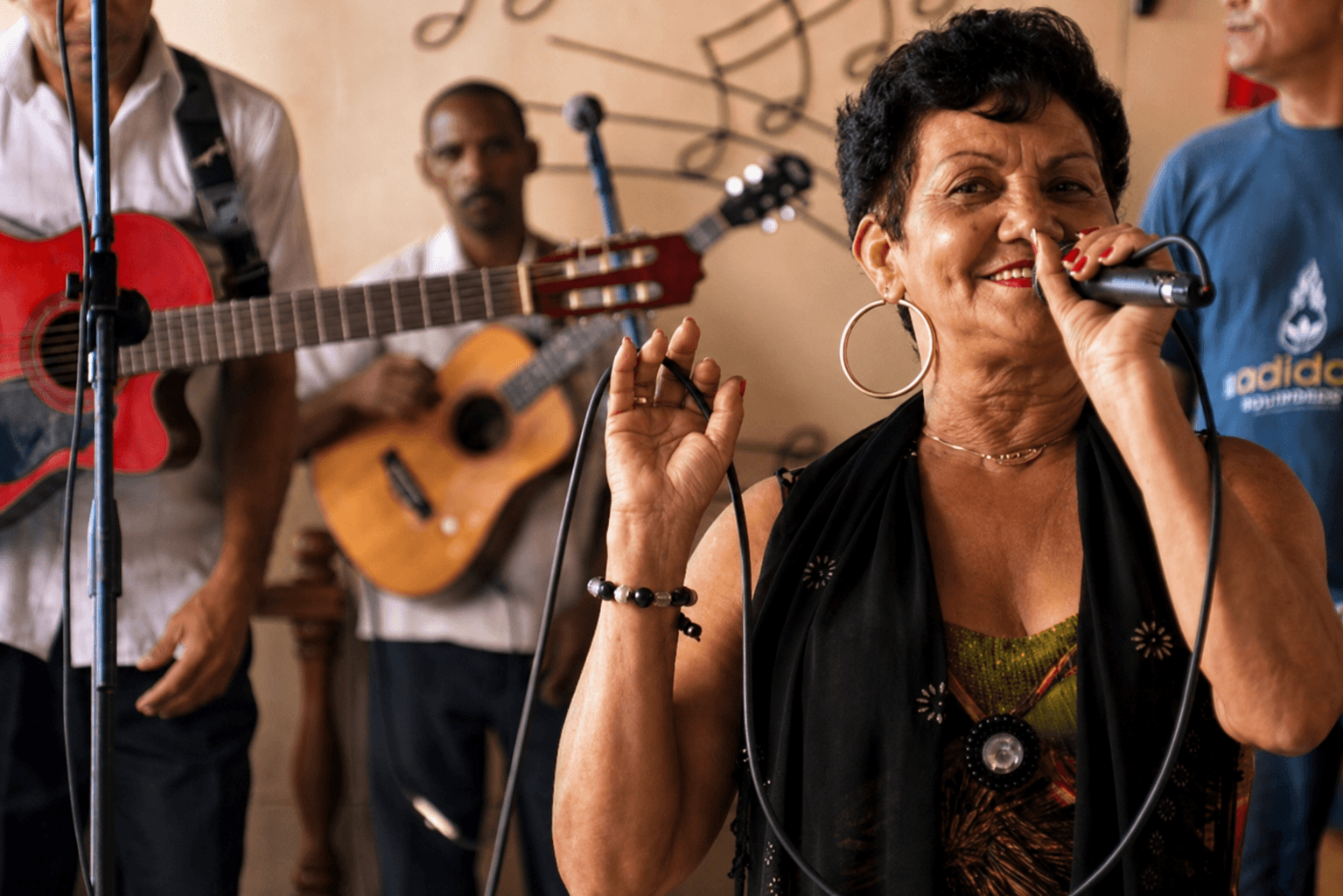
A Festival Built Around Voices and Guitars
The first Pepe Sánchez Trova Festival was held in Santiago de Cuba in 1964. It has since become Cuba’s oldest festival dedicated to trova and one of the country’s longest-running musical celebrations.
The location makes sense. Santiago de Cuba has played an essential role in the history of trova, a tradition built around singers, guitars, poetic lyrics and stories drawn from personal experience.
Trova can be romantic, reflective, humorous or political. Its earliest songs often dealt with love and longing, but the form continued to evolve as each generation found something new to say.
The festival gives those generations a place to meet. Traditional performers share the program with musicians representing filin, nueva trova and more contemporary approaches to songwriting.
Festival at a Glance
Location: Santiago de Cuba, Cuba
Typical schedule: Held annually during March
First edition: 1964
Honoree: José “Pepe” Sánchez
Principal tradition: Cuban trova
Common activities: Concerts, tributes, serenades, theoretical discussions and the Ruta del Trovador
Important date: March 19, Pepe Sánchez’s birthday and Cuban Troubadour Day
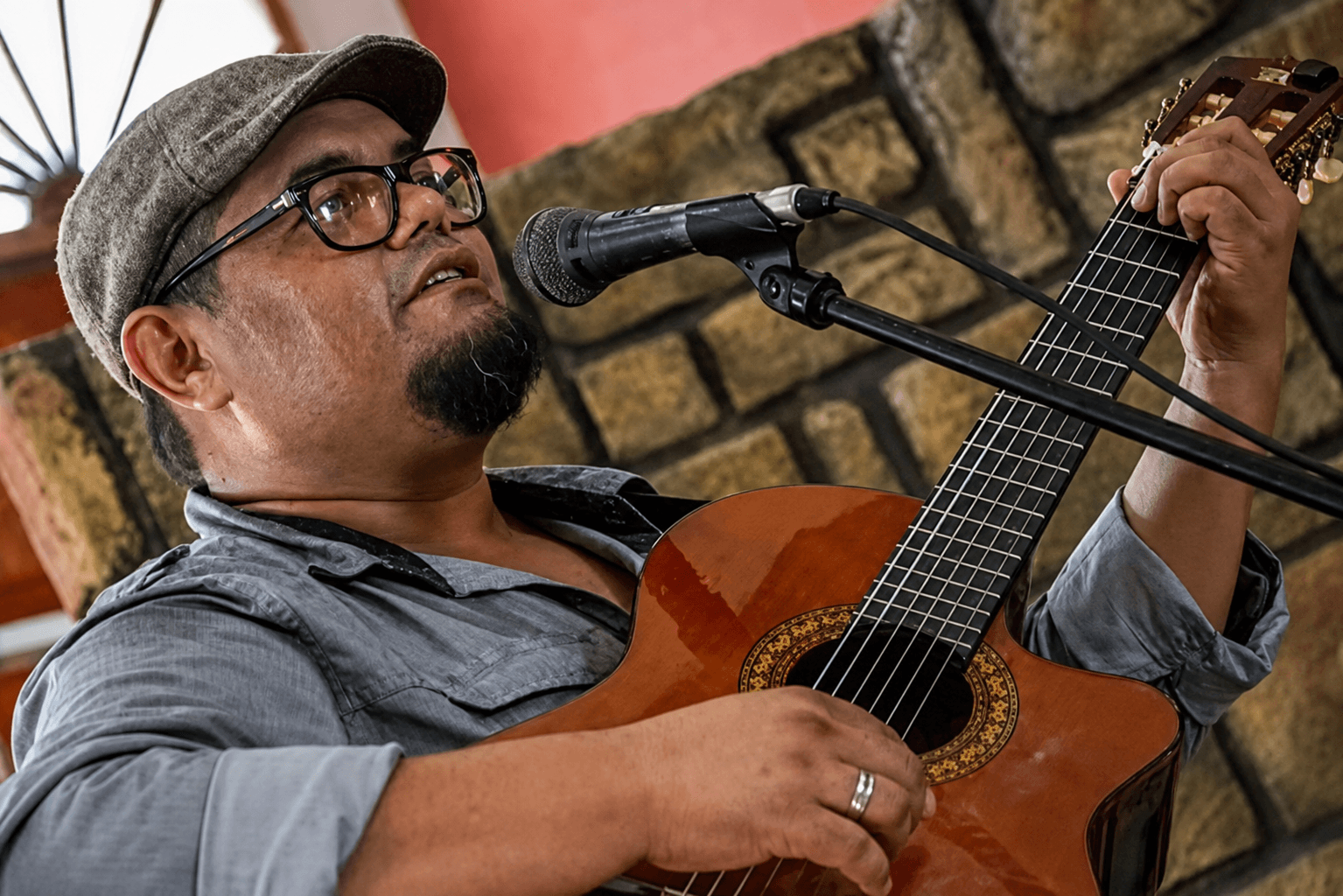

In Santiago de Cuba, trova is more than a chapter in musical history. It remains a living conversation between generations.
Who Was Pepe Sánchez?
José “Pepe” Sánchez was born in Santiago de Cuba on March 19, 1856. Although he had no formal musical education, he became a singer, guitarist and composer whose work influenced many of the trovadores who followed him.
Sánchez reportedly composed much of his music in his head rather than writing it down. That meant many of his songs were eventually lost. Others survived because friends and musicians preserved them.
His best-known composition is Tristezas, widely recognized as the first documented Cuban bolero. The song helped connect the early trova tradition with a form that would eventually travel throughout Latin America and far beyond Cuba.
Sánchez became a model and teacher for important trovadores, including Sindo Garay, Rosendo Ruiz, Manuel Corona and Alberto Villalón. They did not simply repeat his approach. Each developed an individual voice while carrying the tradition forward.
The festival honors that influence. It is named for one man, but it celebrates an entire musical lineage.
Cuban Troubadour Day
March 19 carries special importance during the festival. The date marks Pepe Sánchez’s birthday and is celebrated in Cuba as Día del Trovador, or Troubadour Day.
The festival has often been scheduled around this date, although its exact opening and closing days can change from one edition to another.
Troubadour Day is not simply a birthday tribute. It recognizes the singers and songwriters who have kept the tradition alive, from the early musicians who performed around Santiago and Oriente to the artists carrying trova into the present.
That gives the festival an interesting balance. It looks back, but it does not remain stuck in the past.
How Trova Continued to Evolve
Early Cuban trova was closely associated with a singer, a guitar and lyrics shaped by romance, longing and personal experience. The arrangement could be simple, but the words carried considerable weight.
Later movements expanded that foundation.
Filin, a Cuban interpretation of the English word “feeling,” brought trova and bolero into contact with richer harmonies and an intimate style of performance. The voice remained central, but the musical language changed.
Nueva Trova emerged after the Cuban Revolution and introduced songs shaped by politics, social change and international musical influences. Artists used the older singer-songwriter tradition to address a different Cuba and a different moment in history.
The festival allows these forms to appear beside one another. Traditional trova does not have to disappear for newer approaches to be heard. The contrast is part of the experience.
A listener might hear a song rooted in the romantic language of early trova, followed by another that addresses national history, social concerns or contemporary life.
The guitar remains. The subject changes.
A Festival That Moves Through the City
The Pepe Sánchez Festival is not limited to one stage. Its programs have included concerts, serenades, tributes and discussions in theaters, music venues, plazas, parks and other public spaces around Santiago de Cuba.
Some editions have also carried performances into schools, healthcare centers, recreational spaces and municipalities beyond the provincial capital. That wider program reflects something important about trova: it was never meant to exist only behind the doors of a formal concert hall.
One of the festival’s principal venues is the Casa de la Trova, located near Parque Céspedes in the historic center of Santiago. The venue has long served as a meeting place for musicians and listeners interested in traditional Cuban music.
Parque Céspedes has also hosted festival performances, placing the music in the center of the city rather than separating it from everyday life.
That may be the best way to experience trova. You hear the song, but you also hear the city surrounding it.

The Ruta del Trovador
Among the festival’s most meaningful traditions is the Ruta del Trovador. The musical pilgrimage travels through Santiago and is associated with a visit to Santa Ifigenia Cemetery, where important figures from Cuba’s musical history are remembered.
Pepe Sánchez is buried there, along with other artists connected to Santiago’s musical heritage. Festival participants have gathered at the cemetery to perform, pay tribute and recognize the musicians whose songs shaped the tradition.
It is a solemn part of an otherwise lively celebration.
The route also shows why this festival belongs in Santiago. The city is not merely serving as a convenient host. Its streets, music venues and historic sites are all part of the story.
At Santa Ifigenia, songs become a form of remembrance. The musicians may be gone, but their work is still being performed by voices they could never have known.
The festival celebrates living musicians while remembering the trovadores whose songs made their work possible.
Studying the Music as Well as Playing It
The festival is not built entirely around concerts. Its programs have also included a theoretical event dedicated to examining trova’s history, important musicians and place in Cuban culture.
In recent editions, this academic component has carried the name of journalist and music researcher Lino Betancourt. Musicians, writers and researchers use the gathering to discuss the tradition rather than simply perform it.
That work matters because trova is not a single sound frozen in time. It includes different periods, musical approaches and social settings. Studying those changes helps explain how songs created more than a century ago continue to influence Cuban performers.
In 2022, Cuban trova was declared part of the nation’s cultural heritage. The recognition gave the festival another reason to consider what has been preserved, what has changed and what should be passed to the next generation.
Choosing a Cigar for the Festival
A music festival does not move at only one speed. There are afternoon performances, walks between venues, crowded public concerts and quieter moments when a single singer and guitar hold the room.
For a cigar enthusiast, the cigar should fit the available time and setting.
A Hoyo de Monterrey Epicure No. 1 could accompany an unhurried afternoon between performances. It provides time to sit, listen and take in the city without requiring the entire evening.
Later, when the schedule allows for a longer pause, a Romeo y Julieta Wide Churchill offers a larger format for settling into the night. A Montecristo Especiales No. 2 or Partagás Serie P No. 2 could also become part of the occasion.
These are suggested pairings, not official festival traditions. Smoking may not be permitted at every venue, and a cigar should never interfere with the performers or the people gathered to hear them.
The right moment may come between concerts rather than during one.

Who Will Appreciate the Festival?
You do not need to be a musician or a specialist in Cuban music to appreciate the Pepe Sánchez Festival. It can appeal to travelers interested in songwriting, cultural history and experiences connected to the identity of Santiago de Cuba.
Listeners familiar with traditional trova can hear how the music is being preserved. Those who know nueva trova can trace its relationship to earlier generations. Someone discovering the form for the first time can simply begin with the voices and guitars.
The festival rewards curiosity. Attend performances by artists you know, but leave room for unfamiliar names. Move between formal venues and public spaces. Listen to older musicians and younger performers.
You may not understand every reference in every lyric. You can still understand the emotion.
Why Experience It?
The festival offers an opportunity to hear different generations of Cuban trovadores in the city most closely associated with the tradition.
Its combination of concerts, public performances, historical tributes and musical discussions makes it more than a series of shows. It is an annual examination of where the music began and where it may go next.
Planning Your Visit
The International Pepe Sánchez Trova Festival is generally held in March, close to the March 19 anniversary of Pepe Sánchez’s birth. Exact dates and the length of the program can change each year.
Programs have also changed between editions. A venue used one year may not appear the next, and some performances may take place outside central Santiago or in institutions not ordinarily open to casual visitors.
Travelers should confirm the official schedule before arranging a trip around a particular concert, artist or venue.
Before You Travel
Confirm the dates: Check the schedule for the specific edition you plan to attend.
Review the program: Performances take place at different venues and times.
Confirm access: Determine whether individual events require tickets, invitations or advance reservations.
Allow time between venues: The festival can extend beyond a single theater or music hall.
Check travel regulations: Requirements depend on citizenship, residency and the traveler’s jurisdiction.
More Than a Festival
Pepe Sánchez died in 1918, long before the festival bearing his name began. He could not have known that singers would still gather in Santiago more than a century later to celebrate the musical tradition he helped establish.
The guitars have changed. The lyrics address different times. New generations bring their own influences and concerns.
But the central idea remains remarkably simple: a voice, a guitar and a story worth singing.
For a few days each March, those stories move through Santiago de Cuba. They fill theaters, parks and music halls before becoming part of the city once again.
The festival ends. The trova remains.
Sources
The festival’s history, annual traditions and cultural program were checked against reporting from Cuban cultural institutions and publications.
Cubarte: Festival de la Trova Pepe Sánchez
Cubarte: Festival Venues and Musical Program in Santiago de Cuba